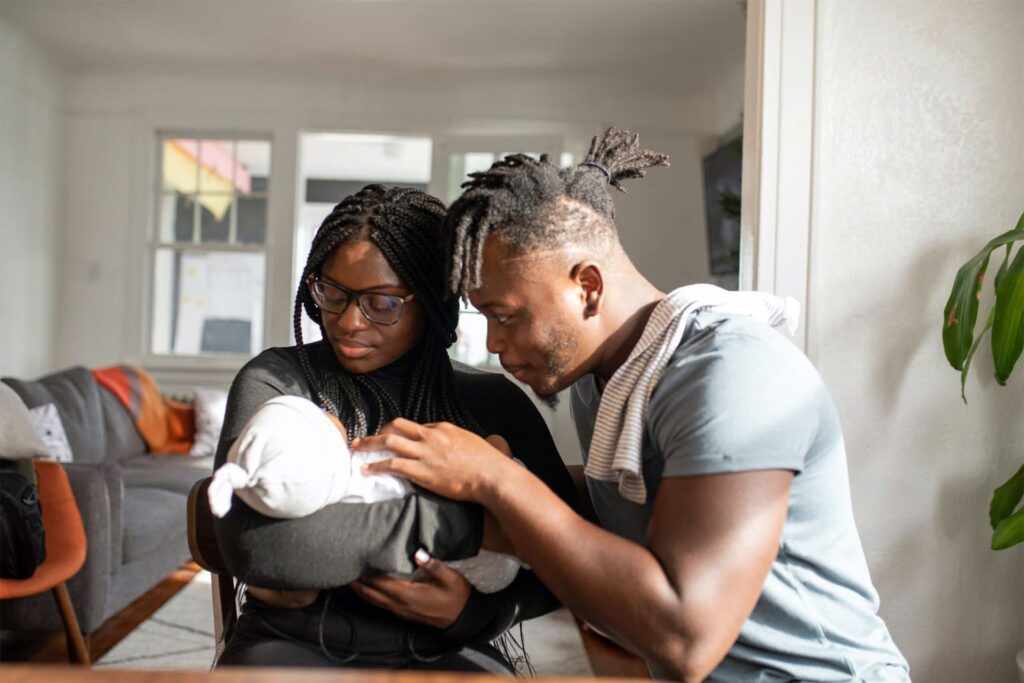

“Sometimes you will have to cry and admit when you feel down…. Then I gather my faculties and move on.”
Written by Lauren Hester
This was a piece of the puzzle my mother arranged for me when I asked about her motherhood experiences as a Black woman. In the Black community mental health is a persistently stigmatized topic that many can’t help but tip-toe around. Mental health challenges aren’t easy to understand and explain and can’t be described in a “cookie-cutter” way. Many people often don’t even realize they need an intervention until they reach a crisis. Black women are especially likely to fall into this category.When being emotionally vocal, we often are labeled as “loud” and/or “angry”. However, when we choose to silence or diminish ourselves, we risk losing the power and impact of our voices. Where does that leave us? Feeling like we have to bear it all internally. We carry sadness, frustration, fear, anxiety, stress, and worry, while exuding a confident, stable “strong independent Black woman” aura. We are expected to be superwomen when we really deserve “super” humanization, support, and a soft place to land.
The Superwoman Schema (SWS) was developed by Dr. Cheryl L. Woods-Giscombé to describe a coping framework adopted by many Black women to navigate racial and gender specific oppression. It represents a “double-edged sword” of resilience and internalized pressure. The SWS consists of five core elements: presenting strength, suppressing emotions, resisting vulnerability, striving for success despite limited resources, and prioritizing caregiving for others (Perez et al., 2023). A research study published in 2025 found that “Black women who are high in adherence to emotional suppression, resistance to vulnerability, and obligatory helping”
(Nelson et al., 2025) may be more likely to experience stress. The results of this study show that by feeling like they have to constantly adopt the facade of invulnerability and having it all together, many Black women are in a pattern of holding on to more than they should have to bear alone. In fact, Black women in the United States tend to experience higher allostatic loads, which are measured amounts of cumulative physiological stress due to chronic exposure to social, economic, and racial stressors (Allen et al., 2020). Allostatic load directly relates to the weathering hypothesis, which asserts that the health of Black women deteriorates more rapidly with age as a result of prolonged exposure to structural inequality and discrimination (Geronimus, 1992).
Weathering isn’t simply a social trend, it’s biology. Black women need holistic support systems in order to truly alleviate stressors and pressures. More support could look like addressing structural inequities in healthcare, workplaces, and social policy, rather than relying only on individual-level solutions. This includes improving access to culturally competent care, enforcing anti-discrimination protections, ensuring fair pay, paid maternity leave, and expanding occupational benefits like childcare. Each of these could help reduce the chronic stressors that contribute to higher allostatic load among Black women. In addition to Black womanhood in general, a whole new layer is introduced when we discuss the experience of Black motherhood.
“Being pregnant with you was one of the happiest moments of my life, especially when I could hear your heartbeat. I was excited.”
This was the joyous anticipation my mother described as she awaited my arrival . Many mothers experience moments like this as they prepare to embrace the new life they are bringing
into the world. However, Black mamas often have extra challenges to prepare for the motherhood journey. Consciously or unconsciously, Black mothers must navigate the unfortunate inequities associated with the reality of structural racism, including residential segregation via historic redlining, school funding based on local property taxes, and disparities in criminal sentencing that affect people of color, to name a few. In addition to these, algorithm bias prioritizing white patients, insurance-based care rationing, care deserts in marginalized neighborhoods, and historical exclusion of people of color from clinical trials can affect the way Black women experience healthcare. These are important to acknowledge as they impact pregnancy, birth, and postpartum.
“They told me I had to go to the hospital immediately.”
My mother was recounting when she was told her blood pressure was dangerously high by healthcare staff just before I was born. She was experiencing pre-eclampsia. While the causes are not understood, it has been shown that preeclampsia disproportionately affects Black women in the US, with one study noting that “African-American race” was listed as a risk factor for the disorder (Fasanya, 2022), although it is the experience of racism, not race that is a risk factor. My mom speaks highly of her experience with her doctors and healthcare providers during her pregnancy. She said that she felt supported, heard, seen, and well taken care of. The attentive and supportive prenatal care my mother received in 2002 is commendable, as it allowed us both to safely get through that time. So her pregnancy and birthing experiences were positive, but what about after I was born?
“Oh my goodness, I felt depressed, hopeless, like I wasn’t a good mother. I had to reach out to [a family friend]…”
This was what my mom remembers from her struggle with postpartum depression. She didn’t have it with her first child, my sister, but experienced severe depression after giving birth to me. My mom reached out to a friend at that time. This decision to seek help speaks volumes—it reflects a moment when the weight of her circumstances became too great to carry alone. Although my mom has what you could call “mom powers” like emotional intelligence, multitasking, resilience, intuition, problem-solving, patience, adaptability, and unconditional love and care, she is still human. All moms are human and must never be expected to be superwomen.
The Superwoman Schema is harmful to Black women because this expectation normalizes, and even encourages chronic stress, discourages vulnerability, and adds difficulty in seeking help. This contributes to burnout, anxiety, and other mental and physical health challenges. In doing our best to be unbothered, strong, and self-reliant, we are being conditioned to be emotionally suppressed. This causes us to internalize stress rather than seek support. This pattern can increase chronic physiological strain, contributing to higher allostatic load over time. This sustained stress accelerates health deterioration by causing additional weathering on our bodies and minds. The idea that Black women must constantly over-perform and prioritize others before themselves is also reinforced. We as a society can move the needle and shift these norms. Communities, organizations, and some healthcare systems have already begun to take action.
The most impactful efforts to combat structural racism in healthcare today focus on changing systems of care rather than just individual behavior. In April of 2021, a major step was taken when the Centers for Disease Control (CDC) declared racism a public health threat (Preventing Chronic Disease (PCD), 2023) leading to investments in health equity programming and new tools like the Healthcare Racial Justice Assessment Tool that can help hospitals identify and fix biased policies and practices (Fraiman et al., 2025). And the CDC REACH Program funds local initiatives that deliver care directly within underserved communities. Roots Community Health Center serves as an example, delivering culturally tailored services and designing care specifically for Black and low-income populations. Leadership and provider training programs offered by groups like Cross Cultural Community Services help healthcare professionals address systemic bias and improve equity-focused care. Advocacy organizations such as the NAACP are pushing for accountability in emerging areas like medical artificial intelligence and health data use, calling for transparency and safeguards to prevent bias in new technologies.
Non-profit organizations and community-based initiatives are also working to create culturally grounded support spaces like sister circles, peer groups, and virtual communities that center emotional safety, shared experience, and validation for Black birthing women. For example, the Black Girls Mental Health Foundation offers the BIRTH Network, which connects Black birthing individuals to culturally competent providers and provides free support groups and perinatal specialists to help them navigate mental health and postpartum care (Black Girls Mental Health Foundation, 2026). Similarly, the Shades of Blue Project provides culturally centered online and in-person support groups, peer networks, and community resource hubs
designed to reduce stigma and foster connection among women of color during pregnancy and postpartum (Shades of Blue Project, 2026).
ACTT (Ask questions, Claim your space, Trust your body, Tell your story) Workshops from the Black Coalition for Safe Motherhood (BCFSM) are designed as interactive, community-centered spaces where Black birthing people and their support networks practice self-advocacy in healthcare settings. Through role-playing, discussion, and shared experiences, participants learn how to assert their rights, communicate with providers, and navigate pregnancy, birth, and postpartum care in ways that promote dignity, emotional safety, and respect (Black Coalition for Safe Motherhood, 2026). These workshops foster emotionally supportive, judgment-free environments where participants can share their stories, validate one another’s experiences, and build confidence in speaking up, which helps to alleviate stress and some of the loads that participants may carry.
Breaking free of the Superwoman schema is imperative because even as systems improve, the expectation that Black women must be constantly strong can still lead to burnout and unmet health needs. Challenging SWS means prioritizing rest, cultivating support, normalizing vulnerability, and creating spaces, both socially and within healthcare– where Black women and people are treated as deserving of care, not just providers of it. This is essential for making broader equity efforts effective and improving the health and wellbeing of Black families.
References
Allen, A. M., Wang, Y., Chae, D. H., Price, M. M., Powell, W., Steed, T. C., Rose Black, A., Dhabhar, F. S., Marquez-Magaña, L., & Woods-Giscombe, C. L. (2019). Racial discrimination, the superwoman schema, and allostatic load: exploring an integrative stress-coping model among African American women. Annals of the New York Academy of Sciences, 1457(1), 104–127. https://doi.org/10.1111/nyas.14188
Black Girls Mental Health Foundation. (2026). The BIRTH Network: Culturally competent care & support for Black birthing individuals. https://www.bgmhfoundation.org/birthnetwork
Fraiman, Y. S., Myrick, J. C., Kagan, C., Beauchamp, D., Blades, P., Copertino, R., Larson, E., & Fadel, C. (2025). Creating the Healthcare Racial Justice Assessment Tool (HC-RJAT): A Novel Tool to Identify Modifiable Loci of Structural Racism in the Healthcare Setting to Guide Equity-Focused Improvements. Journal of racial and ethnic health disparities, 10.1007/s40615-025-02516-4. Advance online publication.
https://doi.org/10.1007/s40615-025-02516-4
Fasanya, H. O., Hsiao, C. J., Armstrong-Sylvester, K. R., & Beal, S. G. (2021). A Critical Review on the Use of Race in Understanding Racial Disparities in Preeclampsia. The journal of applied laboratory medicine, 6(1), 247–256.
https://doi.org/10.1093/jalm/jfaa149
Geronimus AT. The weathering hypothesis and the health of African-American women and infants: evidence and speculations. Ethn Dis. 1992 Summer;2(3):207-21. PMID: 1467758.
Hall, J. E., & Boulware, L. E. (2023). Combating racism through research, training, practice, and public health policies. Preventing Chronic Disease, 20.
https://doi.org/10.5888/pcd20.230167
Nelson, T., Oshin, L. A., Shahid, N. N., & Ramadurai, R. (2025). Superwoman schema and perceived stress among Black women: a latent profile analysis. Ethnicity & health, 30(8), 898–912. https://doi.org/10.1080/13557858.2025.2553185
Perez, A. D., Dufault, S. M., Spears, E. C., Chae, D. H., Woods-Giscombe, C. L., & Allen, A. M. (2023). Superwoman schema and John Henryism among African American women: An intersectional perspective on coping with racism. Social Science & Medicine, 316, 115070. https://doi.org/10.1016/j.socscimed.2022.115070
Shades of Blue Project. (2026). Support groups and maternal mental health services. https://www.shadesofblueproject.org/support